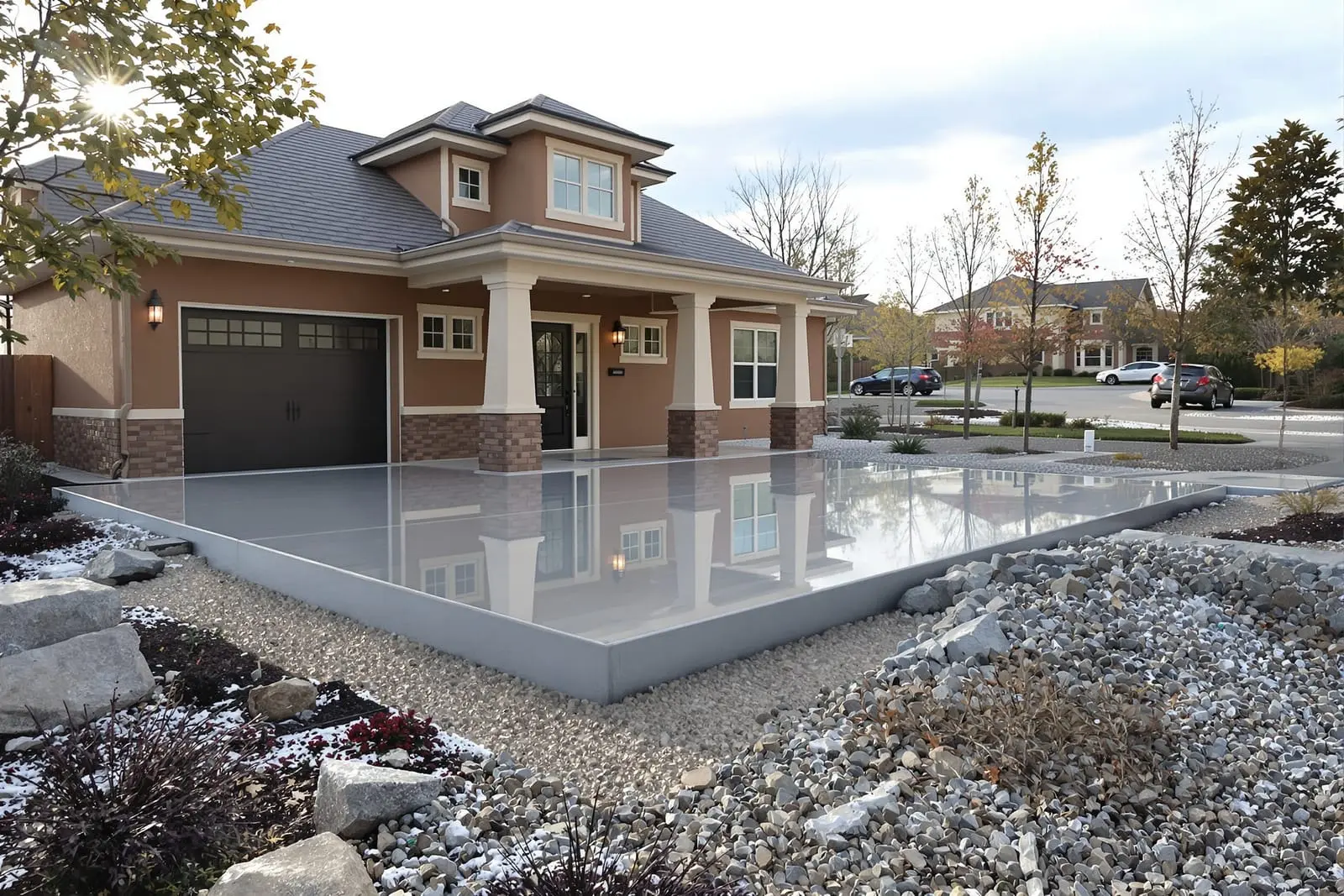
Get smooth, durable floors and exterior surfaces with commercial concrete flatwork in Chattanooga, TN. We pour slabs for storefronts, warehouses, and walkways with attention to flatness and finish. Proper joint layout and reinforcement help control cracking in tough conditions. Keep your facility functional with professional grade concrete flatwork.
Primetime Concrete Chattanooga provides professional commercial concrete flatwork throughout Chattanooga, TN and the surrounding area. Our licensed, insured crew delivers safe, clean, on-time work with a free estimate before anything begins. Call (423) 443-3289 or request your free quote.
Commercial Concrete Flatwork That Matches Chattanooga Projects
Commercial slabs and flatwork are the surfaces your business actually runs on. Parking lots, loading areas, dumpster pads, warehouse floors, showroom slabs, and walkways all have to be built to match real site conditions in Chattanooga. Primetime Concrete Chattanooga focuses on getting those details right, so your concrete holds up under forklifts, delivery trucks, foot traffic, and freeze-thaw cycles along the Tennessee River.
Local codes and use requirements are the starting point, but they are not enough. We look at soil conditions, drainage patterns, and how the slab will actually be used from day one. A light-duty sidewalk for an office off Shallowford Road will not be designed the same way as a loading dock in an industrial park near the Volkswagen plant. That difference in approach is what keeps joints from raveling, corners from breaking, and surfaces from spalling early.
If you are planning new construction or replacing failed concrete on an existing commercial site, we can walk the property with you, point out where thicker sections, added reinforcement, or slope changes are needed, and give you a clear plan before we ever pour a yard of concrete.
How We Build Long-Lasting Commercial Slabs & Flatwork
A good commercial concrete flatwork job starts below the surface. For sites around Chattanooga we begin with existing conditions. Many older properties in Brainerd, East Ridge, and along Rossville Boulevard have variable fill and clay pockets. We remove unsuitable material where needed, then install and compact a crushed stone base to a specified thickness, usually 4 to 8 inches depending on loads.
Once the base is solid, we set forms to the right elevations and slopes so water drains away from buildings and high-traffic areas. Standing water is one of the main reasons concrete fails early, especially near storefronts, dock doors, and stair entries. We deliberately slope exterior slabs to gutters, drains, or landscaped areas so freeze-thaw expansion does not break the surface.
Reinforcement is next. For most commercial slabs we use rebar, welded wire mesh, or both, supported on chairs so it stays in the middle of the slab, not lying on the base. For heavier loads such as dumpster pads, drive-thru lanes, and truck aprons we may also use thicker sections and tighter joint spacing to control cracking.
We then place a concrete mix that matches the needs of the project. Typical exterior commercial slabs in Chattanooga use a 4,000 to 5,000 psi mix, often with air entrainment to handle winter conditions. Interior slabs can be customized for flatter tolerances, specific finishes, or future floor coverings. Our crews place, bull float, edge, and joint the concrete, then finish it with broom, hard trowel, or specialty textures based on use and slip-resistance requirements.
Design Options: Thickness, Finishes, and Reinforcement Choices
Commercial concrete flatwork is not one-size-fits-all. The right design balances cost, load requirements, and long-term performance. For standard parking areas and sidewalks in Chattanooga shopping centers or medical offices, we commonly install 4 to 5 inch slabs with fiber reinforcement and control joints cut at 8 to 12 feet on center. For drive lanes, trash truck routes, and loading docks, 6 to 8 inches with rebar is often the better choice.
Surface finish is another key decision. Exterior walkways usually get a broom finish for slip resistance, especially on slopes and near entrances where rainwater and winter deicing salts collect. Restaurant patios, outdoor seating areas along the riverfront, or office courtyards may use a light broom with border trowel work or exposed aggregate to upgrade the look without sacrificing traction.
Interior commercial slabs, like warehouse floors or shop spaces, often call for machine trowel finishes that are flatter and smoother. If you intend to use epoxy, polished concrete, or specialty coatings later, we pour and finish with those future steps in mind, controlling joints and flatness so those upgrades perform better. We can also integrate thickened slab areas for equipment pads, anchor bolt layouts, or conduit runs so you do not need costly rework later.
Joint layout and reinforcement strategy are planned together. In Chattanooga’s weather, we see a wide temperature swing that causes expansion and contraction. Proper joint spacing, depth, and sealing, combined with the right rebar or mesh pattern, keeps those natural movements from turning into random cracks that damage your investment.
What Drives Cost on Commercial Concrete Flatwork in Chattanooga
When we price a commercial slab or flatwork job, the biggest cost drivers are not just square footage. Thickness, reinforcement, site access, and preparation requirements all matter. A 5 inch parking area behind a small retail strip with good truck access is going to cost less per square foot than a 7 inch heavy-duty pad tucked in a tight downtown alley that requires smaller loads and more labor to place.
Subgrade conditions are often the hidden factor. Many older Chattanooga commercial properties have been built and rebuilt over fill materials, utility cuts, and patchwork repairs. If the base is soft, holding water, or full of debris, we may need to excavate deeper, install geotextile, and bring in additional aggregate. That adds cost up front but avoids slab settlement, faulted joints, and trip hazards later.
Reinforcement and mix design also affect price. Heavier rebar mats, doweled joints between slabs and curbs, or higher psi concrete mixes cost more in materials and labor. On the other hand, cutting corners in these areas usually shows up a few years later as cracked panels, broken corners at dock doors, or rutted wheel paths where garbage trucks stop and turn.
We walk you through each of these cost decisions. Primetime Concrete Chattanooga can provide options that show what you gain or give up with different slab thicknesses, reinforcement schedules, and finishes so you can match the design to your budget without guessing.
Common Problems With Commercial Slabs & How We Avoid Them
Most of the slab failures we are called to look at in Chattanooga are avoidable. The same issues show up again and again: poor drainage, lack of joints or badly placed joints, thin sections at edges, and underdesigned areas where heavy vehicles stop or turn.
Drainage problems show up as puddling, heaving, or surface scaling, especially near building entrances, downspouts, and at the bottom of sloped drives. To avoid this, we plan slopes carefully, tie into existing drainage where possible, and may add trench drains or inlets if the property has no clear place for the water to go.
Random cracking is often tied to joint layout and timing. Joints that are too far apart or cut too late let shrinkage forces create uncontrolled cracks. Our crews either hand tool joints during finishing or come back with saws at the correct window while the concrete is still green enough to crack where we want it.
Edge failures are common along dumpster pads and delivery areas. Tires and outriggers often end up right at the slab edge. We counter this with thicker edges, additional rebar, and proper transitions between slab and asphalt or gravel. Where slabs meet existing concrete or building foundations, we dowel and isolate correctly to control differential movement.
By addressing these details, Primetime Concrete Chattanooga builds commercial concrete flatwork that does not just look good at the final walkthrough, but holds up under real use years later.
What Chattanooga Customers Should Decide Before We Pour
Before we schedule a commercial concrete flatwork project, there are a few decisions that save time and change orders. First, define how each area will be used. Will forklifts, pallet jacks, garbage trucks, or delivery semis use the slab, or is it strictly for cars and foot traffic. This determines thickness and reinforcement, and it is far cheaper to size it correctly now than to repair a failed slab later.
Second, clarify drainage expectations. If you have areas that already flood or hold water, let us know during the site walk. We can usually correct grades, add surface drains, or tie into existing systems, but those choices must be designed before formwork starts.
Third, consider future changes. If you plan to add a canopy, freezer, mechanical yard, or new equipment within a few years, we can thicken sections, embed conduits, or install anchor blockouts during the initial pour. Chattanooga businesses often expand in phases, and planning for that saves cutting and patching existing slabs.
Finally, timing and access matter. Many commercial projects must stay open to customers or operations. We often phase work, pour in sections, or schedule overnight or weekend work so your business can continue running. During planning, Primetime Concrete Chattanooga will help you map out which entrances, drives, or loading areas can be temporarily closed and when, so the pour and curing schedule fits your operations without surprises.
“
Professional commercial slabs & flatwork, done right the first time, quality materials, honest pricing, and results that last.
Primetime Concrete Chattanooga
Commercial Slabs & Flatwork Across Our Service Area