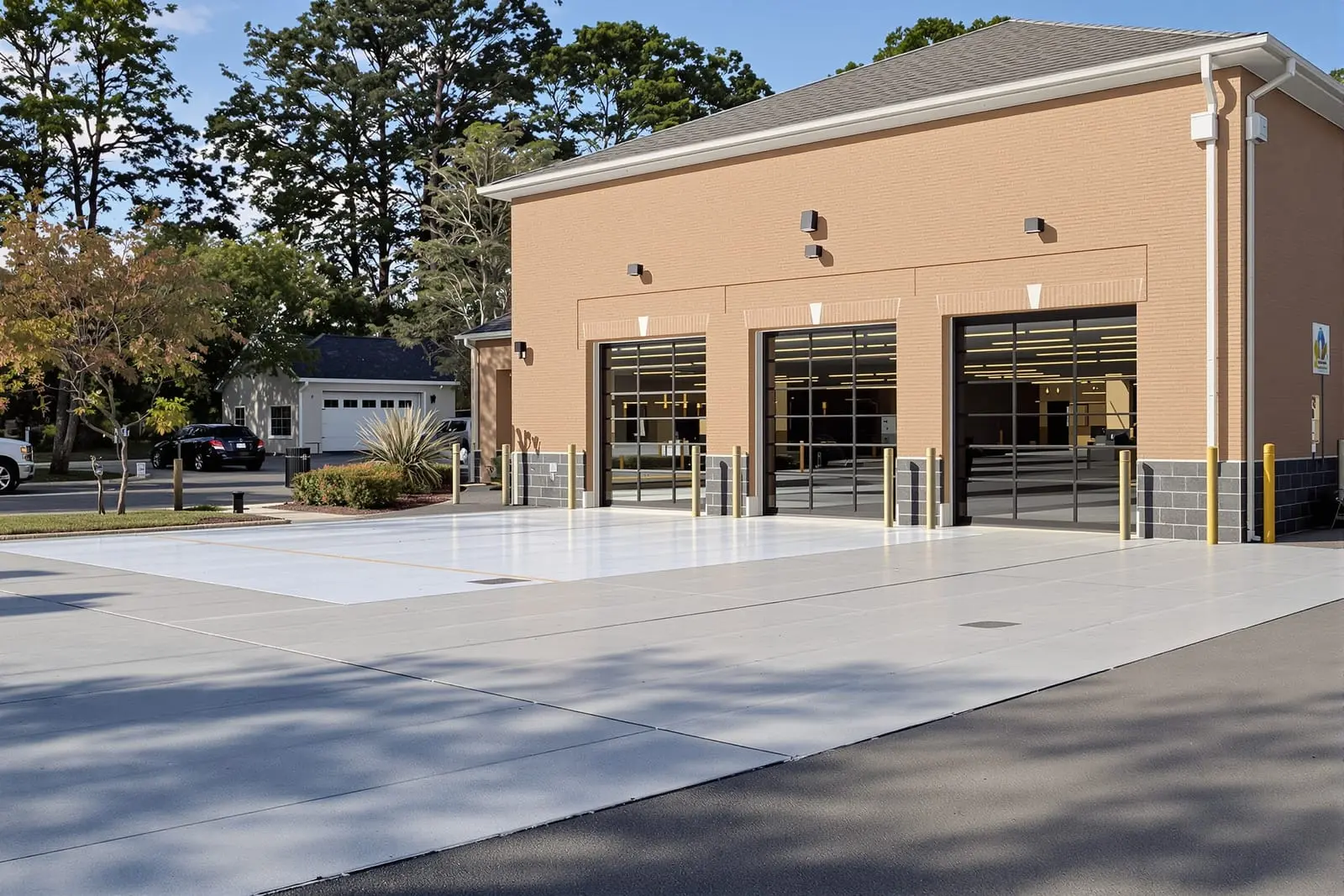
We construct commercial concrete slabs in Chattanooga, TN for loading docks, dumpster pads, equipment pads, and other high stress areas. Our slabs are designed with proper thickness, reinforcement, and edge protection to handle frequent loading and impacts. From dock aprons to service yards, we install concrete surfaces that hold up to demanding use.
Primetime Concrete Chattanooga provides professional commercial concrete slab throughout Chattanooga, TN and the surrounding area. Our licensed, insured crew delivers safe, clean, on-time work with a free estimate before anything begins. Call (423) 443-3289 or request your free quote.
Commercial concrete slabs that match how your Chattanooga business actually works
When you call Primetime Concrete Chattanooga for a commercial concrete slab or loading dock, we start by looking at how your operation really runs. We want to know what is rolling over that slab every day: forklifts, pallet jacks, 18-wheelers, yard trucks, or just light delivery vans. The expected loads and traffic patterns drive almost every design decision, from slab thickness to reinforcement to joint layout.
For most light commercial floors and small loading areas in Chattanooga, 5 to 6 inch slabs with fiber or rebar reinforcement are common. For heavy truck courts, distribution centers, and dock approach ramps, we often recommend 7 to 8 inch slabs with heavier rebar or dowel baskets at the joints. We also look at turning movements and braking zones, since that is where concrete tends to crack or spall first.
Soil conditions are another local factor. Around the Tennessee River and older industrial parts of Chattanooga, we frequently see fill material and softer subgrades. In those areas we may undercut and replace poor soils, add compacted stone base, or use geotextile fabric to stabilize the subgrade before we pour. On slopes near Lookout Mountain or Missionary Ridge, drainage and runoff control become just as important as slab thickness. Getting the base right is usually the difference between a slab that holds up for decades and one that starts settling within a few seasons.
We also coordinate with your other trades. If electricians or plumbers need floor penetrations for dock levelers, sump pits, bollards, or conduit, we mark and sleeve those locations before the pour so you do not end up cutting into a brand new slab later.
How we build loading docks that stand up to trucks and Tennessee weather
Loading docks fail in Chattanooga for the same three reasons over and over: poor drainage, weak edges, and bad joint planning. At Primetime Concrete Chattanooga, we design your dock area to avoid those headaches from the start.
For raised loading docks, we pour thicker, heavily reinforced concrete at the dock face where trailers impact and where dock levelers are mounted. It is common for us to use embedded steel angles or extra dowels along that front edge so it does not chip out when trucks back in hard or when levelers flex under load. At the dock approaches, we slope concrete away from the building and into trench drains or inlets so stormwater does not pond at your overhead doors.
Dock ramps and aprons are typically sloped at 6 to 8 percent, which balances truck clearance with safety for forklifts and pallet jacks. In winter, shaded docks in Chattanooga can stay damp and slick, so we often recommend a broom or tined finish for better traction instead of a very smooth surface. For high traffic areas, we can saw-cut traction grooves or apply a non-slip sealer after the concrete cures.
Trucks tend to follow the same wheel paths every day, so we place control joints and reinforcement with those lines in mind. On many dock aprons we will use doweled contraction joints across the traffic flow to control where shrinkage cracks form, while tying separate pours together so the slabs stay level at the joints. If you already have an older dock slab that is moving or breaking up, we can assess it for partial replacement, adding new reinforced edges and approach panels that tie cleanly into the remaining concrete.
Commercial concrete slab construction, step by step
If you have never been through a commercial slab project, it helps to know what is coming. Here is how a typical job with Primetime Concrete Chattanooga goes, from dirt to finished slab.
First is layout and excavation. We stake out the slab or dock footprint, then remove topsoil and any soft or organic material. We check subgrade compaction with a plate compactor or roller. If the soil pumps under foot or under equipment, it gets reworked or replaced. Getting this right is especially important in low-lying Chattanooga sites that may have wet or silty fill.
Next, we install a compacted aggregate base, most often a crushed stone graded to local specs. This base layer is typically 4 to 8 inches thick depending on the loads and soil conditions. We laser grade the base so the slab thickness is uniform, which keeps stresses consistent and reduces random cracking.
Then we set forms and reinforcement. We use wood or steel forms pinned securely so they do not move under the weight of the concrete. Reinforcement might be #4 rebar on a set spacing grid, welded wire mesh, macro-synthetic fibers, or a combination. Around column pads, dock faces, door openings, and heavy equipment pads, we detail the steel more heavily, because those spots see far more stress.
Concrete placement comes next. For commercial slabs and loading docks we commonly specify a 4,000 psi or higher mix, with air entrainment for freeze-thaw resistance. On hot Chattanooga summer days, we may adjust set time with admixtures or schedule early morning pours to avoid flash setting. On colder days, we watch concrete temperature closely, may use warm water in the mix, and protect the slab with blankets overnight. We use laser screeds or straightedges to strike off the surface, then bull float and power trowel as needed depending on the finish.
Finally, we cut joints and cure the slab. Control joints are usually saw-cut within 6 to 24 hours of the pour, timing it so the concrete is hard enough not to ravel but early enough to guide shrinkage cracking. Joint spacing is determined by slab thickness and panel geometry. We then cure the slab either with a curing compound or with wet curing methods, which significantly increases long-term strength and durability, especially crucial for high-load industrial use.
Pricing, scheduling, and what affects the cost of your slab or dock
Most Chattanooga owners want to know two things right away: what will this cost and how long will it take. With commercial concrete slabs and loading docks, there are a few major drivers that we walk through in detail before we quote.
Thickness and reinforcement are the biggest cost factors that you directly control. A 6 inch slab costs more than a 4 inch slab, and rebar on a tight grid costs more than fiber alone. However, cutting corners here usually costs more later in repairs, so we match the slab design to your actual use instead of defaulting to the thinnest option.
Site prep can change the price quickly. If your existing ground is level, firm, and well drained, prep is straightforward. If we find buried debris, soft spots, or drainage problems, we may need additional excavation, stone, or fabric. On Chattanooga sites with older industrial history, we sometimes run into unpredictable fill. Primetime Concrete Chattanooga always reviews these issues with you before proceeding so that any changes in scope are clear.
Access and staging also matter. A downtown Chattanooga project with tight access and limited pump locations costs more per square foot than a wide open industrial park with room for trucks and equipment. Working around active operations, specific shutdown windows, or night-only work will affect the schedule and sometimes the cost. We regularly phase work so that parts of your facility stay open while we pour and cure new areas.
The best times of year to schedule are typically spring and fall, when temperatures are moderate and weather is more predictable. In mid-summer, we can absolutely pour, but we have to manage heat, wind, and rapid set times more carefully. In mid-winter, there may be days where freezing temperatures require extra protection or waiting for a better window. We build these seasonal realities into our proposed schedule so your operations are not surprised by preventable delays.
Repairs, upgrades, and how to keep your slab performing
If you already have a commercial concrete slab or loading dock in Chattanooga that is giving you trouble, we can help you figure out whether it needs full replacement or just targeted repairs. Many issues such as surface spalling at dock faces, small edge breaks, or isolated settlement panels can be addressed without shutting down your whole operation.
For slabs with trip hazards or uneven joints, we may use grinding, slab jacking, or selective panel replacement. On loading docks where impact has broken the front edge, we often saw-cut back to sound concrete, add new reinforcing steel and dowels, and pour a heavy-duty repair section with higher strength concrete or embedded steel protection.
We can also improve existing slabs by adding surface treatments. For example, if forklift tires are polishing the surface and creating slick conditions at a warehouse entrance, we can add a textured overlay or apply a penetrating sealer that improves traction and reduces dusting. In chemical exposure areas, such as around certain manufacturing processes or wash bays, we may recommend a specialty coating system over a sound concrete base.
Preventive care is straightforward but often overlooked. Keeping joints sealed, maintaining good drainage away from the slab, and avoiding heavy point loads on unsupported edges all extend slab life. Primetime Concrete Chattanooga can set up a simple inspection schedule with you so small issues at your loading docks and commercial slabs are caught early, long before they become large structural problems or safety hazards.
“
Professional loading docks & commercial slabs, done right the first time, quality materials, honest pricing, and results that last.
Primetime Concrete Chattanooga
Loading Docks & Commercial Slabs Across Our Service Area